
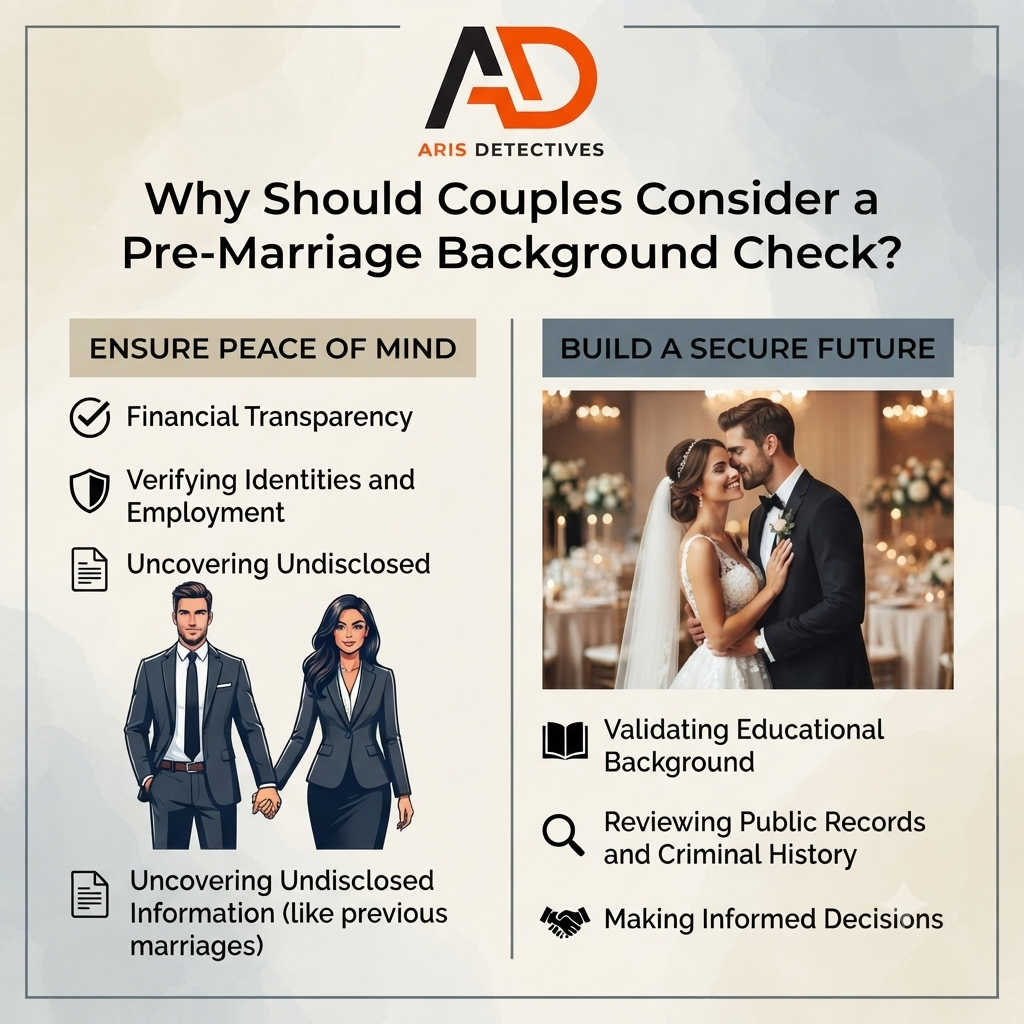
Marriage is an important life decision. It involves trust, communication, family relationships, finances, and long-term responsibilities. While no background check can guarantee a successful marriage, learning important facts about a prospective partner before marriage can help reduce the risk of unexpected problems later.
A pre marriage background check Lucknow can help verify information that may be difficult to confirm through normal conversations. It may include checking identity, education, employment, marital status, residential information, and other relevant details, depending on the situation and applicable laws.
What Is a Pre-Marriage Background Check?
A pre-marriage background check is a process of verifying important information about a prospective spouse before marriage.
People may conduct these checks when they have concerns about information that has been shared during the marriage discussion. The purpose should be to confirm facts and make an informed personal decision, rather than to invade someone’s privacy.
A professional investigation may focus on legally obtainable information and documented facts.
Can a Background Check Prevent Problems After Marriage?
A background check cannot completely prevent future marital problems. However, it may help identify certain risks before marriage.
For example, if important information about a person’s identity, previous marriage, employment, or other relevant circumstances has been misrepresented, discovering the discrepancy before marriage gives the concerned person an opportunity to ask questions and make their own decision.
In this way, marriage background verification can sometimes help reduce the possibility of unpleasant surprises after marriage.
Problems That Verification May Help Identify
- Hidden Marital Status
One of the serious concerns in some marriage arrangements is whether the person has been previously married or is currently married.
Where legally accessible records or reliable information are available, verification may help clarify a person’s marital history.
This can be particularly relevant when a prospective partner has provided incomplete or inconsistent information.
- False Employment Claims
A person may describe their job, company, position, or business differently from reality.
Employment verification can help establish whether the basic professional information provided is accurate.
This can be important when financial expectations or family decisions are connected to the person’s stated career.
- Educational Qualification
Educational qualifications are sometimes an important part of matrimonial profiles.
If a person claims to have a particular degree, university qualification, or professional certification, appropriate verification can help identify whether the information is genuine.
- Identity and Personal Details
Basic identity verification can help confirm whether important personal details match the information provided during the marriage discussion.
Depending on the circumstances, this may include checking documents and other legally available information.
- Financial Information
Financial compatibility can be an important part of married life.
A background inquiry may help identify relevant information about employment, business activities, or financial circumstances where such information can be legally verified.
However, private financial records should not be accessed without proper authorization.
- Lifestyle-Related Concerns
Sometimes families have concerns about a prospective partner’s lifestyle or social circumstances.
A professional investigator may collect information through lawful methods. However, assumptions should not be treated as facts. Any finding should be properly verified before conclusions are made.
Why Do People Consider Background Checks Before Marriage?
Marriage decisions are often based on information received from the person, relatives, friends, matrimonial websites, or other sources.
In some cases, information may be incomplete or inaccurate.
A background check can provide an additional layer of verification.
It may help answer questions such as:
- Is the person’s identity genuine?
- Is their marital history accurately disclosed?
- Is their employment information correct?
- Are their educational qualifications genuine?
- Are important personal details consistent?
- Are there significant discrepancies between what was claimed and what can be verified?
The purpose is not to create suspicion. It is to establish facts where reasonable concerns exist.
When Should You Consider Verification?
A background check may be considered when there are genuine reasons to verify important information.
For example:
- Information provided by the prospective partner keeps changing.
- Employment details cannot be independently confirmed.
- There are unexplained gaps in marital history.
- Educational qualifications appear inconsistent.
- Important information differs between family members.
- The person is unwilling to provide reasonable documentation.
- There are significant concerns about identity or personal history.
A verification process should be proportionate to the concern and conducted lawfully.
Can It Guarantee a Happy Marriage?
No.
This is one of the most important points to understand.
A background check can verify certain facts, but it cannot predict how two people will behave throughout their marriage.
Marriage also depends on:
- Communication
- Mutual respect
- Trust
- Financial understanding
- Family expectations
- Emotional compatibility
- Shared responsibilities
- Personal values
- Conflict management
Therefore, background verification should be considered one part of the decision-making process, not a substitute for communication and mutual understanding.
What Should a Professional Background Check Include?
The exact scope depends on the person’s concerns and the information that can legally be verified.
A professional pre-marriage verification service may include:
Identity Verification
Checking basic identity information against appropriate documents or legally available records.
Address Verification
Confirming whether the residential information provided is consistent with available evidence.
Employment Verification
Checking the basic employment information provided by the prospective partner.
Education Verification
Verifying claimed educational qualifications where appropriate.
Marriage History Verification
Investigating whether there is reliable evidence of a previous marriage or undisclosed marital status.
Social and Background Enquiry
Where legally appropriate, investigators may conduct discreet enquiries to verify specific concerns.
The scope should always be clearly defined before an investigation begins.
Importance of Evidence-Based Verification
A background check should not be based on rumours.
For example, hearing from someone that a person “may have a problem” does not automatically make the allegation true.
A professional investigation should distinguish between:
Information received → Information checked → Evidence obtained → Finding reported
This approach reduces the risk of making an unfair decision based on gossip or assumptions.
Privacy and Legal Considerations
Background investigations involve personal information, so privacy and applicable laws are important.
Investigators should use lawful methods to obtain information. They should not illegally access private accounts, passwords, confidential databases, private communications, or protected personal information.
A responsible investigation should also avoid harassment, impersonation, unauthorized surveillance, or other unlawful methods.
Before hiring an investigator, it is sensible to ask how the investigation will be conducted and what type of information can legally be obtained.
How a Background Check Can Help Before Marriage
The biggest benefit is informed decision-making.
Suppose a person discovers before marriage that an important claim made by a prospective partner is incorrect. They can discuss the issue, ask for clarification, seek supporting documents, or reconsider the marriage decision.
Without verification, the same information may only become known after marriage, when the consequences can be more complicated.
Therefore, verification may help identify certain issues earlier.
What a Background Check Cannot Tell You
There are also clear limitations.
A background check cannot reliably determine:
- Whether someone will always remain faithful
- Whether a marriage will be successful
- How someone will handle future disagreements
- Whether two people will remain emotionally compatible
- What choices someone will make years later
- Whether every personal detail has been discovered
No investigation can provide absolute certainty about another person’s future behaviour.
Questions to Ask a Detective Agency
If you are considering a marriage background check, ask the agency:
- What information will you verify?
- How will the investigation be conducted?
- Will the methods comply with applicable laws?
- What evidence will be included in the final report?
- How long will the investigation take?
- What information do you need from the client?
- How will confidential information be handled?
- What are the investigation charges?
- Will you clearly distinguish verified facts from unverified claims?
A professional agency should explain the process clearly before starting the investigation.
Final Thoughts
So, can a background check prevent problems after marriage?
It cannot prevent every marital problem, but it may help identify certain important discrepancies before marriage. Verifying relevant information about identity, employment, education, marital history, and other legitimate concerns can help a person make a more informed decision.
The most responsible approach is to combine background verification, open communication, document verification, and mutual understanding.
Marriage is a long-term commitment. Taking reasonable steps to understand important facts before making that commitment can help reduce avoidable surprises later.