
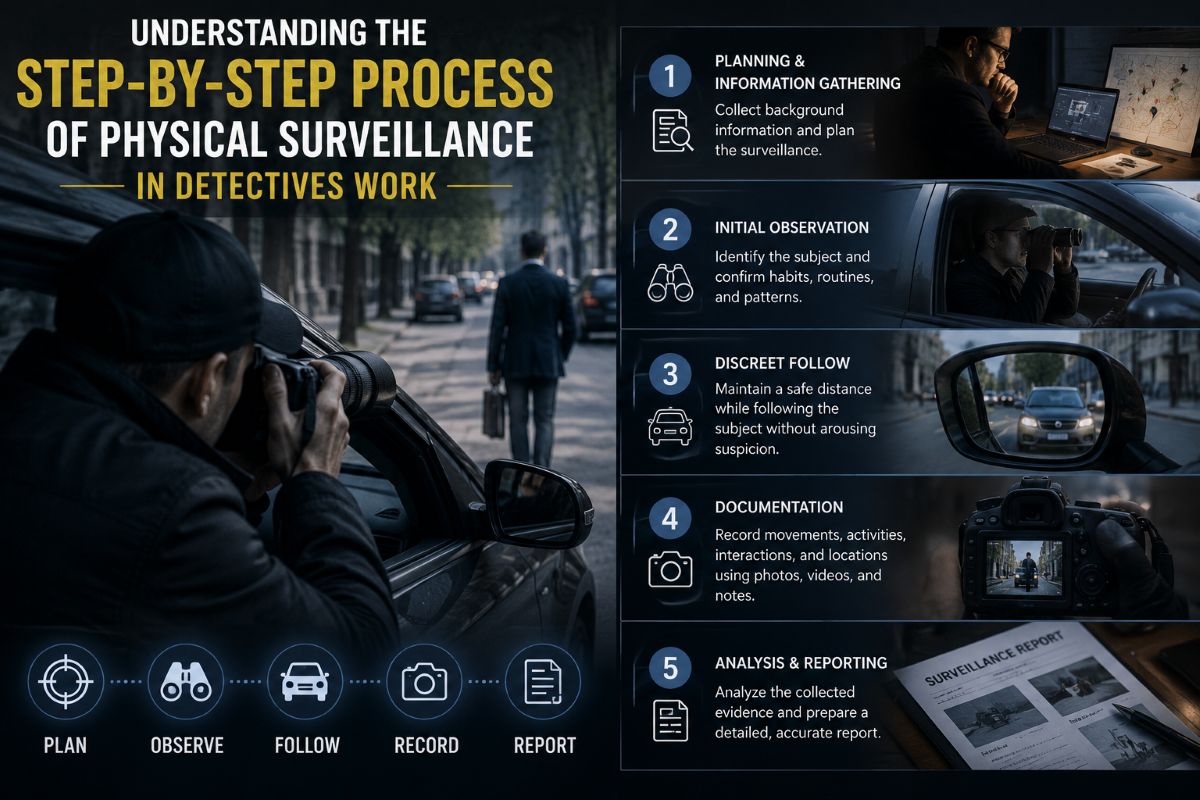
Physical surveillance is one of the most important tools used in detective work. It helps gather real-time information about a person’s activities, behavior, and movements. Whether it’s a personal case or a corporate investigation, surveillance plays a key role in finding the truth.
In this article, let’s understand the step-by-step process of physical surveillance in a simple and clear way.
1. Case Understanding and Planning
Every investigation starts with proper planning.
Detectives first:
- Understand the client’s requirements
- Identify the target person (subject)
- Define the goal of surveillance
For example:
- Is it a pre-marriage investigation?
- A cheating spouse case?
- Or a corporate fraud case?
After this, a surveillance strategy is created. This includes location, timing, and resources needed.
2. Background Research
Before starting physical tracking, detectives collect basic information like:
- Address and workplace
- Daily routine
- Social connections
- Vehicle details
This step helps in:
- Avoiding mistakes
- Planning smarter surveillance
It ensures the team is well-prepared before fieldwork begins.
3. Team Setup and Role Assignment
Physical surveillance is rarely done alone.
A professional team is created where:
- One person tracks the subject
- Another records evidence
- Others handle backup and communication
This teamwork helps in:
- Maintaining continuous tracking
- Avoiding suspicion
4. Selection of Surveillance Location
Detectives carefully choose where to observe from.
Common locations include:
- Near the subject’s home
- Office surroundings
- Public places like cafes, malls, or parking areas
The goal is to:
- Stay hidden
- Get a clear view of activities
5. Real-Time Monitoring
This is the core step of surveillance.
Detectives:
- Follow the subject discreetly
- Observe movements and meetings
- Note time, location, and behavior
Important points:
- Maintain safe distance
- Avoid eye contact or suspicion
- Stay alert at all times
This step requires patience, focus, and experience.
6. Evidence Collection
All observations are recorded as proof.
Detectives collect:
- Photos
- Videos
- Notes and timestamps
This evidence must be:
- Clear
- Accurate
- Legally acceptable
Proper documentation is very important for final reporting.
7. Maintaining Confidentiality
In detective work, secrecy is everything.
Detectives ensure:
- Client identity is protected
- Surveillance remains unnoticed
- Information is not leaked
This builds trust and professionalism.
8. Report Preparation
After surveillance is complete, a detailed report is prepared.
It includes:
- Daily activity summary
- Supporting photos/videos
- Key findings
The report is:
- Simple to understand
- Fact-based
- Useful for decision-making
9. Client Briefing
Finally, detectives explain the findings to the client.
They:
- Share the complete report
- Answer questions
- Provide expert advice (if needed)
This helps the client take the right next step.
10. Legal and Ethical Considerations
Professional detectives always follow:
- Legal rules
- Ethical boundaries
They avoid:
- Illegal tracking
- Privacy violations
This ensures the investigation is safe and lawful.
Conclusion
The step-by-step process of physical surveillance in detective work is detailed, disciplined, and highly strategic. From planning to reporting, every step matters in uncovering the truth. Detective agency Noida
A skilled detective uses:
- Observation
- Patience
- Smart techniques
When done correctly, physical surveillance becomes a powerful tool for reliable and confidential investigation.